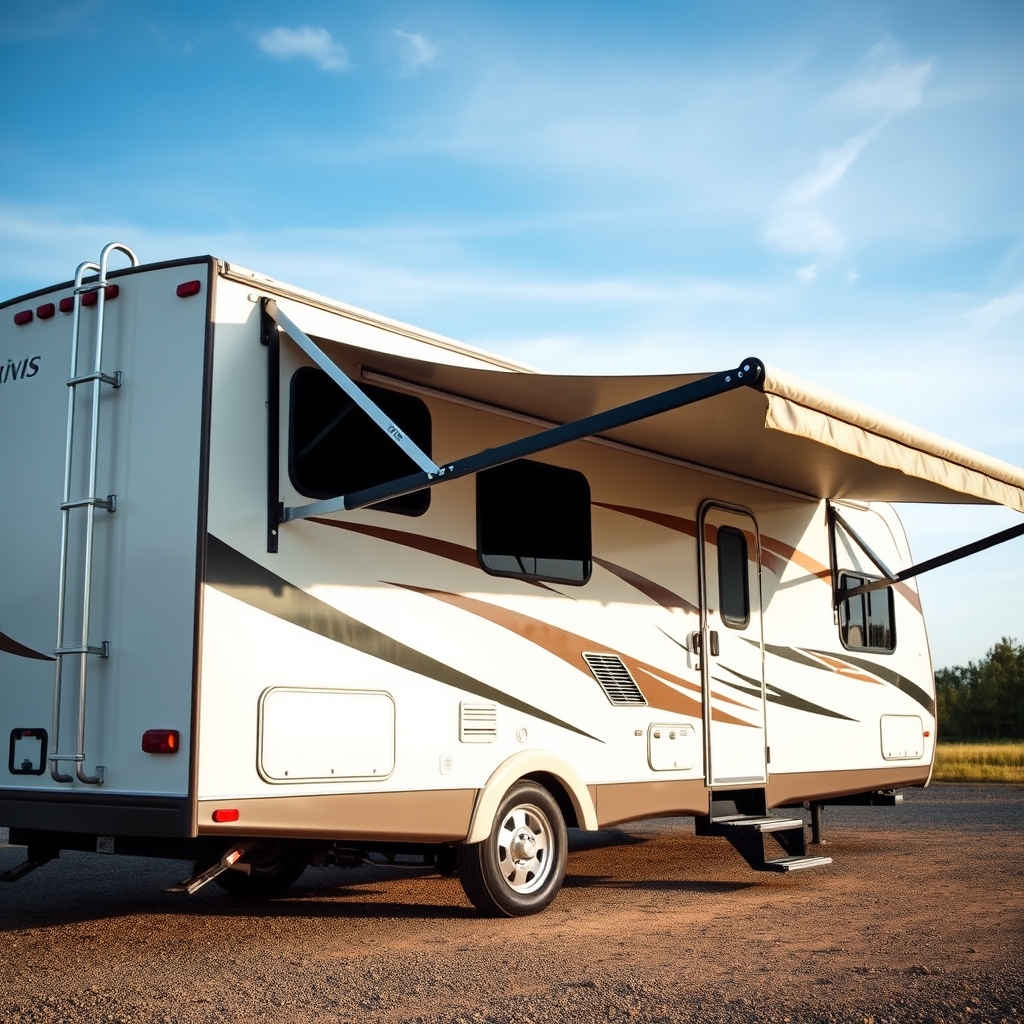
If your RV awning is stuck open, the priority is to determine whether you have a simple power/control fault or a mechanical problem before using the manual override.
What happens when you press the retract switch tells you which direction to go: silence points toward power or controls, while humming, clicking, twisting, or uneven movement points toward the motor, arms, fabric, or drive mechanism.
| Symptom | First checks |
|---|---|
| Nothing happens | Battery voltage, fuse, switch, controller, wiring |
| Motor hums but awning does not move | Binding, weak motor, gear/drive problem |
| Awning starts then stops | Low voltage, thermal overload, binding |
| One side moves unevenly | Arm alignment, fabric tracking, damaged hardware |
| Extends but will not retract | Switch circuit, controller, limit/motor issue |
| Stuck open | Power fault, mechanical bind, model-specific manual override |
The key rule is simple: do not keep holding the switch if the awning is binding, twisting, or making abnormal noise.
Safety first
An extended awning can become a large sail in wind and can cause serious damage if it moves unexpectedly.
If bad weather is approaching and the awning cannot retract, prioritize getting it secured using the manufacturer’s emergency procedure.
Keep hands, clothing, and tools away from moving arms, joints, and the roller tube.
Do not remove spring-loaded or tensioned components unless the manufacturer’s procedure specifically calls for it. Awning arms and roller assemblies can store significant mechanical energy.
Start with usable 12V power
Most power RV awnings depend on the house-battery 12-volt system.
Check:
- House-battery voltage
- Battery disconnect
- Shore-power converter output
- Awning fuse
- Any inline fuse or breaker
Lippert’s power-awning operating guidance starts by confirming the battery is connected and charged before attempting retraction.
A weak battery can allow lights and small loads to work while the awning motor stalls under load.
If possible, test battery voltage while pressing the retract switch.
Check the awning fuse and breaker
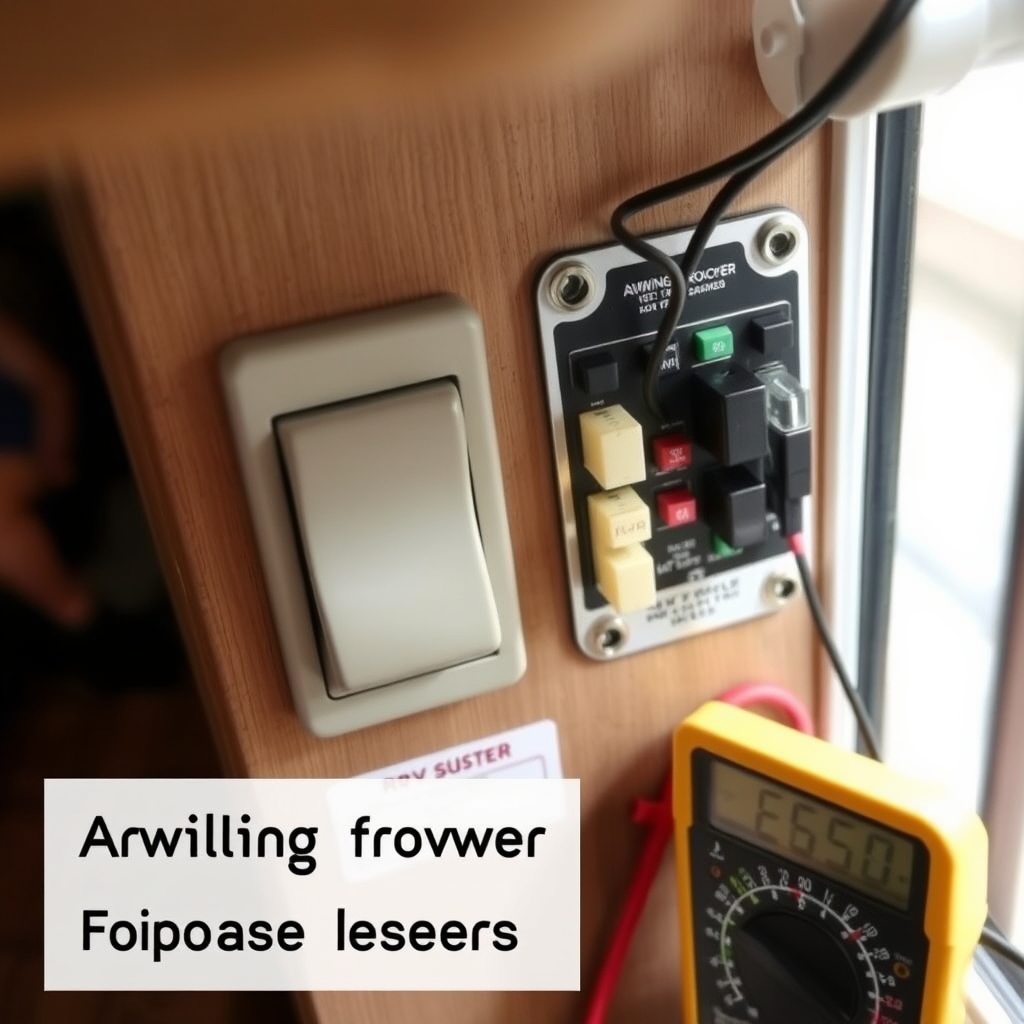
If the awning is completely silent, inspect the awning circuit protection.
Depending on the RV, this may include:
- Main 12V fuse panel
- Inline fuse behind the wall switch
- Resettable breaker near the battery compartment
- Fuse or protection at the controller
Replace a blown fuse only with the same rating.
If the replacement fuse blows immediately, stop replacing fuses. A shorted wire, seized motor, or overloaded mechanism may be causing excessive current.
Check the wall switch or control panel
A power awning may use:
- Simple rocker switch
- Multiplex control panel
- Remote receiver
- Smart-arm controller
If the awning works in one direction but not the other, the switch or controller can be part of the problem because extend and retract commands are separate functions.
Check for:
- Loose switch terminals
- Damaged connectors
- Water intrusion
- Control-panel error
- Remote battery or pairing issue
Do not bypass a smart controller unless the manufacturer’s troubleshooting procedure specifically allows it.
What the motor sound tells you
The sound the awning makes is useful.
Completely silent
Focus on power, fuse, switch, controller, and wiring.
Click or hum but no movement
The motor may be receiving power but cannot turn the roller because of:
- Low voltage
- Mechanical binding
- Damaged gear
- Weak or failed motor
- Debris in the arms
- Fabric jam
Starts, then stops
The motor may be hitting thermal protection or current overload because the awning is binding.
Let the motor cool before testing again.
Repeatedly holding the switch can overheat the motor.
Inspect the awning arms for binding
Stand to the side of the awning and visually inspect both arms.
Look for:
- Bent arm sections
- Twisted joints
- Debris in tracks
- Loose hardware
- Damaged pivot points
- One arm lagging behind the other
Lippert’s troubleshooting information lists alignment, debris, and damaged arms as causes of awnings that will not retract correctly.
Do not force a bent arm closed with the motor.
If one side is visibly out of alignment, stop before the roller or fabric is damaged.
Check fabric tracking and roller alignment
If the awning rolls unevenly or bunches on one side, inspect the fabric.
Look for:
- Fabric shifted in the awning rail
- Uneven roll on the tube
- Torn edge
- Fold or bunch near the roller
- Debris caught in the fabric
- Damaged roller tube
A fabric edge that has shifted can make the awning pull sideways and overload the motor.
Minor debris can be removed safely with the awning stopped.
If the fabric has stretched badly or the roller tube is bent, adjustment or replacement may be required.
Verify voltage at the motor
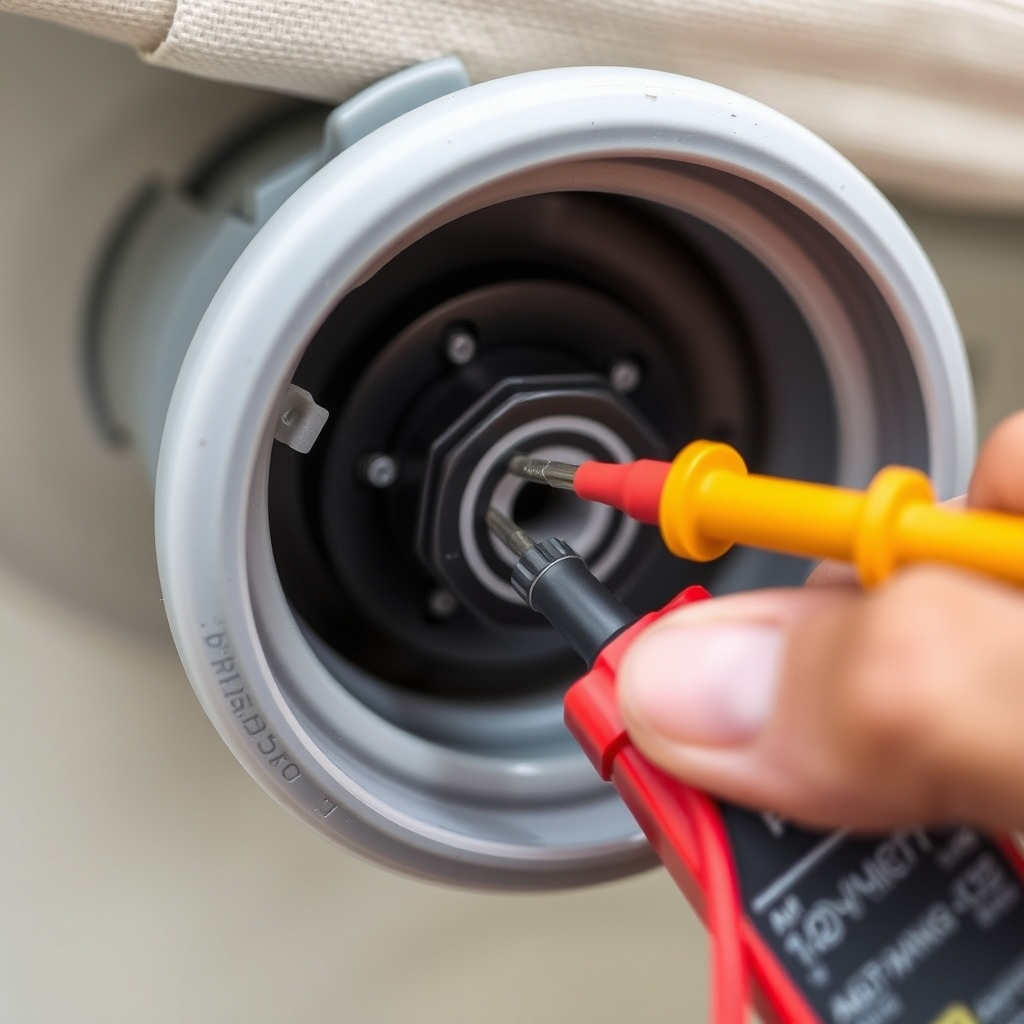
If the fuse, switch, and controller appear normal, confirm whether the motor actually receives voltage during a retract command.
This separates a control/wiring problem from a motor problem.
Possible results:
- Correct voltage at motor, no movement: motor or mechanical drive problem.
- Little or no voltage at motor: wiring, switch, relay, or controller problem.
Because motor polarity is commonly reversed to change direction, model-specific wiring matters.
Do not apply direct battery power to motor leads unless the manufacturer’s procedure confirms it is appropriate for your exact awning system.
If it extends but will not retract
A one-direction-only failure can point toward:
- Retract side of wall switch
- Controller output
- Wiring fault
- Motor internal limit/control problem
Before replacing the motor, verify that the controller actually sends a retract command and that the motor receives it.
If your awning uses an integrated motor/limit assembly, some internal faults may require motor-assembly replacement rather than separate limit-switch repair.
Before using the manual override
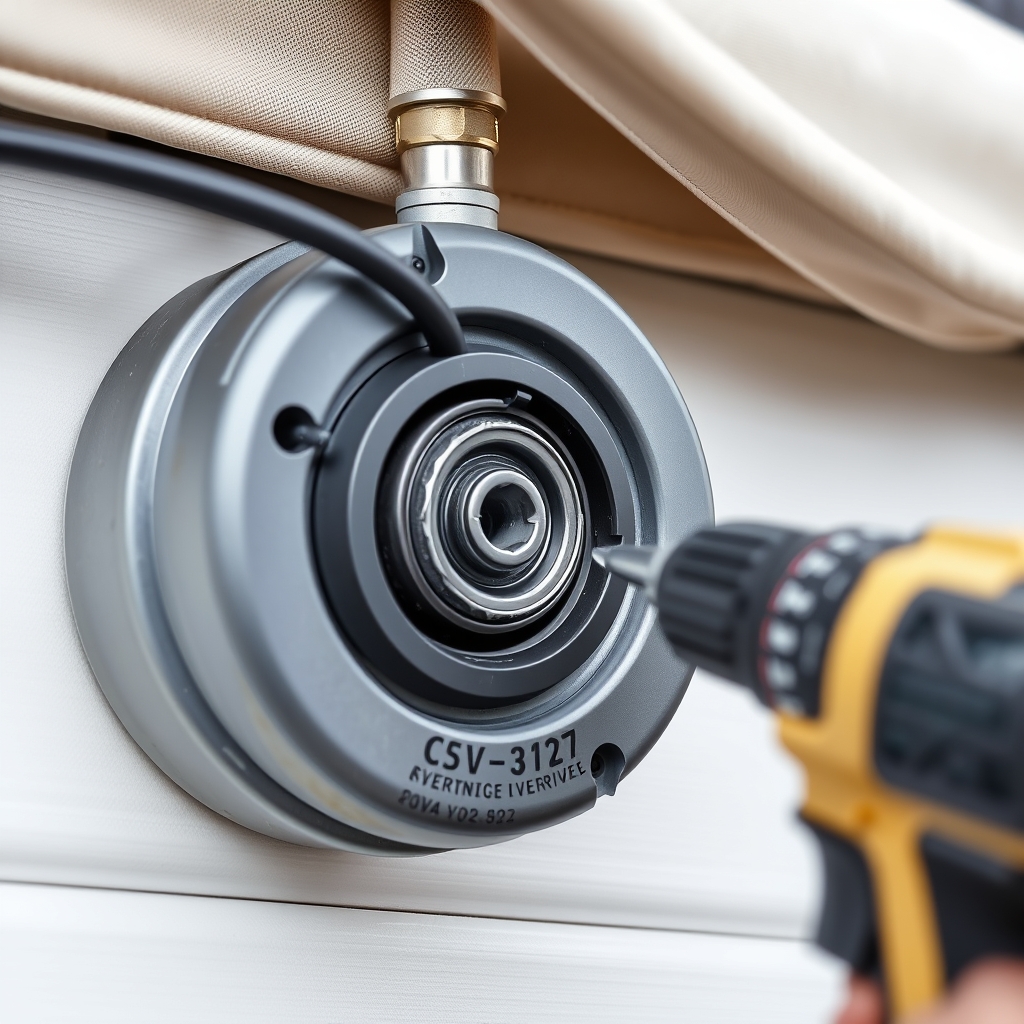
Do not improvise the override.
Different awning systems retract differently.
For example, some Lippert power awnings provide a manual override at the motorized drive head that can be turned with a drill after removing an access grommet. Other awnings use a different procedure entirely.
Before using an override:
- Identify the awning brand and model.
- Find the exact manual.
- Confirm the correct drive head.
- Follow the specified direction and tool.
- Secure the awning for travel afterward if required.
Never assume a generic drill or wrench method applies to every awning.
Secure the awning before travel
If you manually retract an awning after a failure, confirm it is mechanically secure before driving.
Depending on the system, that may involve:
- Travel locks
- Arm latches
- Retaining straps
- Manufacturer-approved temporary securing method
A partially latched awning can deploy while driving and cause severe damage.
If you cannot verify that the awning is locked for travel, do not drive normally.
When should you replace the motor?
Motor replacement becomes reasonable after you have confirmed:
- Good 12V supply
- Fuse and breaker are good
- Switch/controller sends the retract command
- Correct voltage reaches the motor
- Arms and fabric are not binding
- Motor still will not turn the roller
Do not replace the motor just because the awning is stuck.
A weak battery, failed switch, controller fault, or misaligned arm can create the same symptom.
When should you call an RV technician?
Use professional service if:
- Arm is bent or twisted
- Roller tube is damaged
- Fabric is badly misaligned
- Motor or gearbox is grinding
- Awning cannot be secured for travel
- Spring-loaded hardware must be disassembled
- Electrical testing requires accessing wiring you cannot safely reach
- Manual override procedure is unclear
A damaged awning can release stored tension unexpectedly.
Decision flow
Use this sequence:
- Confirm usable 12V battery power.
- Check fuse and breaker.
- Test the wall switch or controller.
- Listen for motor activity.
- Inspect both arms for binding.
- Check fabric tracking and roller alignment.
- Verify voltage reaches the motor.
- Isolate one-direction-only control faults.
- Use the model-specific manual override only if necessary.
- Secure the awning before travel.
Frequently asked questions
Quick answers to the questions RV owners usually ask after working through this guide.
01 Why does my RV awning do nothing when I press retract?
Start with battery voltage, the awning fuse or breaker, wall switch, controller, and wiring. A completely silent awning is usually an electrical or control problem.
02 Why does the awning motor hum but not retract?
The motor may be receiving power but unable to move the awning because of low voltage, arm binding, fabric misalignment, damaged gears, or a weak motor.
03 Why does my awning extend but not retract?
A one-direction-only failure can be caused by the retract side of the switch, controller output, wiring, or an internal motor/limit problem.
04 Can I manually retract an RV awning?
Usually yes, but the method depends on the exact awning system. Use the manufacturer’s manual override procedure for your brand and model.
05 Can I drive with the awning tied shut?
Only use a manufacturer-approved or professionally safe securing method. The awning must be positively retained before travel.
Bottom line
Diagnose an awning that will not retract by separating power, control, motor, and mechanical binding.
Start with 12V power and circuit protection, then check the switch/controller, listen to the motor, inspect the arms and fabric, and verify voltage at the motor.
Use the manual override only for the exact awning model, and never travel until the awning is securely retained.
This guide is educational. Stop and use a qualified RV technician when a procedure involves unsafe electrical, propane, structural or pressurized-system work beyond your experience.