If your RV water pump is not working, start with one question: does the pump run when you open a faucet?
That immediately separates an electrical problem from a water-delivery problem.
| Symptom | First checks |
|---|---|
| Pump is completely silent | Switch, fuse, battery voltage, wiring, pressure switch |
| Pump runs but no water comes out | Fresh tank, valves, inlet strainer, suction leak, lost prime |
| Pump runs constantly | Leak, open fixture, air leak, failed check valve, pressure switch |
| Pump cycles every few minutes | Small plumbing leak, toilet valve, check valve |
| Pump is noisy or sputters | Air in lines, loose mount, restricted inlet |
The most efficient diagnosis is to follow the symptom instead of replacing the pump first.
Safety first
RV fresh-water pumps are usually 12-volt demand pumps, but they can start automatically when system pressure drops.
Turn the pump switch off before opening fittings, removing the inlet strainer, or working around the pump head.
Use potable-water-rated hose, fittings, sealants, and replacement parts on the fresh-water system.
If wiring is melted, a fuse repeatedly blows, or access requires dismantling plumbing you cannot safely restore, use an RV technician.
Step 1: Confirm the fresh tank actually has water
Do not trust the tank monitor alone.
RV tank sensors can be inaccurate, especially after storage or long-term use.
Add a known amount of water to the fresh tank if you are unsure.
If the pump runs but only moves air, an empty or very low tank is the simplest explanation.
Also check that the fresh-tank drain is fully closed.
Step 2: Check the pump switch and 12V fuse
If the pump is completely silent, stay on the electrical side first.
Check:
- Water-pump switch
- 12V fuse
- House-battery voltage
- Battery disconnect
- Pump ground
- Accessible wiring connectors
If the fuse is blown, replace it only with the same type and rating.
If the replacement fuse blows again, stop replacing fuses. That indicates a wiring, motor, or pump-head fault that needs diagnosis.
Step 3: Measure voltage at the pump
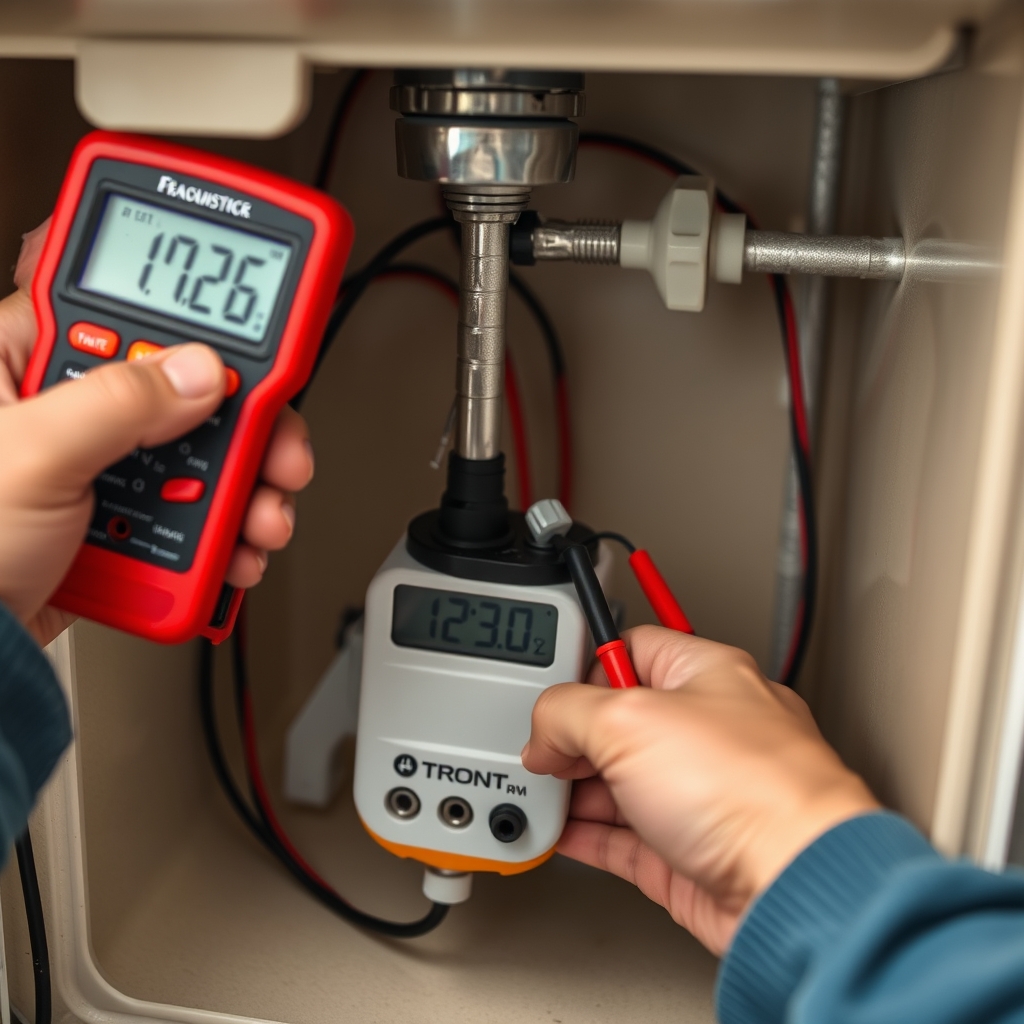
A lit switch does not prove the pump is receiving usable voltage.
If the fuse is good but the pump is silent, measure voltage at the pump while a faucet is open and the pump should be running.
Possible results:
- Correct voltage at the pump but no motor activity: pump motor, pressure switch, or internal mechanism may be faulty.
- Little or no voltage at the pump: trace the switch, fuse, wiring, relay, or ground.
The SHURflo 4008 troubleshooting guide also recommends checking charging-system voltage, ground quality, fuse/breaker, main switch, and wiring when a pump will not start.
Step 4: If the pump runs but no water comes out, check the valves
After winterizing or de-winterizing, valve position is a common cause.
Check:
- Fresh-tank supply valve
- Winterizing/siphon valve
- Tank-fill or city-water selector
- Low-point drains
- Water-heater bypass valves if the plumbing layout makes them relevant
The pump must be drawing from the fresh tank, not from an empty winterizing hose or the wrong valve path.
If the problem started immediately after winterization, storage, or plumbing work, check valve position before replacing anything.
Step 5: Clean the inlet strainer
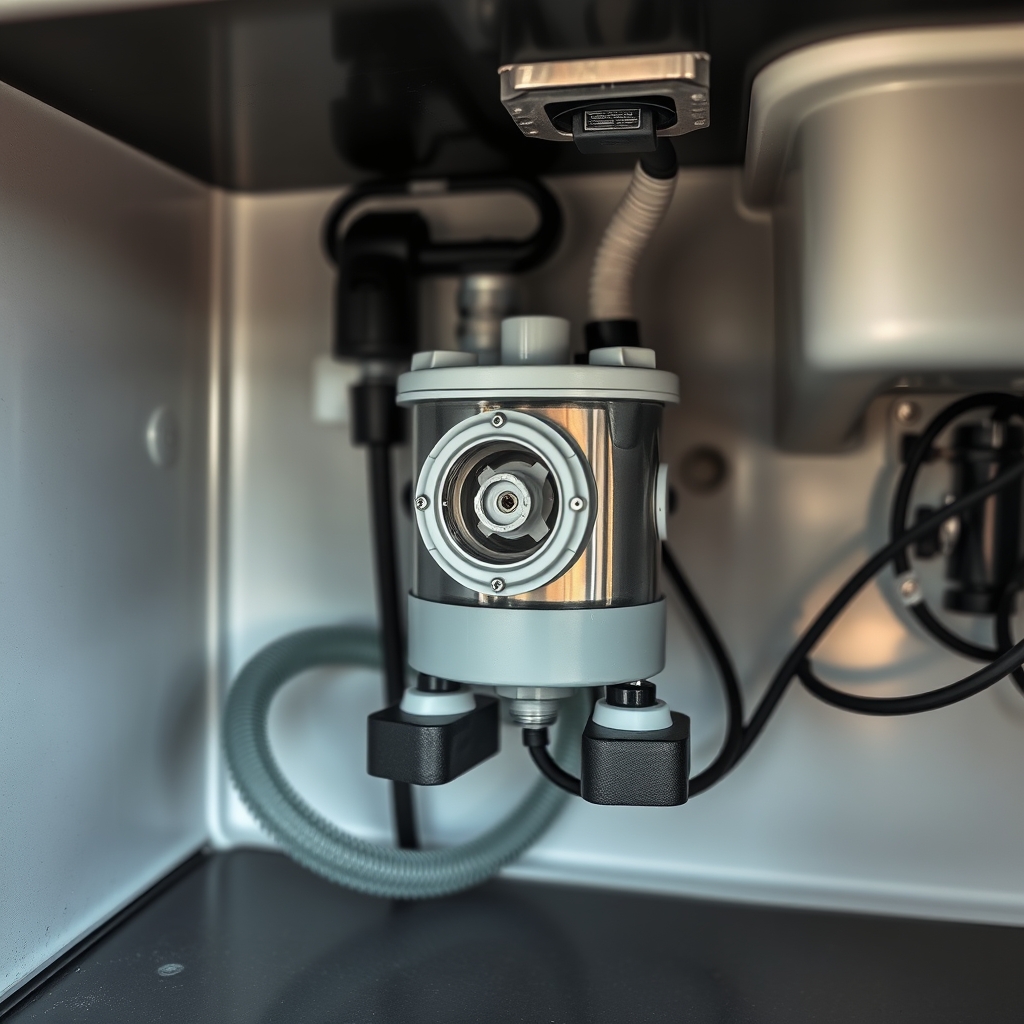
Many RV water pumps have a small clear strainer on the inlet side.
A clogged strainer can make the pump run loudly or continuously while moving little or no water.
Turn the pump off and relieve system pressure before opening the strainer.
Then:
- Remove the strainer bowl
- Clean the screen
- Inspect the O-ring
- Reassemble carefully
Do not overtighten a plastic strainer housing. A cracked housing can create a suction-side air leak.
Step 6: Prime the pump and purge trapped air
If the fresh tank has water and the inlet path is open, the pump may simply have lost prime.
Open a cold-water faucet close to the pump and switch the pump on.
You may hear air and sputtering before water flow becomes steady.
After the nearest faucet runs normally, purge other fixtures one at a time:
- Kitchen faucet
- Bathroom faucet
- Shower
- Outside shower
- Toilet
Air after winterization is common.
Do not let the pump run indefinitely if it never begins pulling water.
Step 7: Look for suction-side air leaks
A loose fitting between the fresh tank and pump can prevent the pump from priming even if no water is visibly leaking.
That side of the system is under suction, so it can pull air inward without dripping water outward.
Inspect:
- Pump inlet fitting
- Strainer housing
- Hose clamps
- Tank outlet connection
- Flexible inlet hose
- Threaded adapters
Look for loose fittings, cracked plastic, kinked hose, or damaged seals.
This is one of the most important checks when a pump runs normally but never builds water pressure.
Step 8: Check for a kinked or restricted inlet hose
A soft hose can collapse under suction.
Inspect the line between the tank and pump for:
- Tight bends
- Pinched sections
- Collapsed hose
- Debris
- Closed valves
SHURflo specifically lists restricted or kinked inlet plumbing as a cause of a pump that runs but will not prime.
If the inlet path cannot deliver water freely, replacing the pump will not solve the problem.
Step 9: If the pump runs constantly, look for pressure loss
A demand pump should stop once system pressure reaches its shutoff point.
If it keeps running, either:
- It cannot build pressure
- Water is escaping somewhere
- Air is entering the suction side
- The pressure switch is not responding correctly
Check:
- Faucets
- Shower valves
- Toilet valve
- Low-point drains
- Plumbing fittings
- Water heater connections
- Pump check valve
If no external leak is visible, a failed internal check valve or pump-head problem becomes more likely.
Step 10: If the pump cycles with every fixture closed
A pump that briefly runs every few minutes is usually losing pressure.
Start with the smallest leaks:
- Dripping faucet
- Toilet valve seepage
- Outside shower
- Water-heater fitting
- Hidden PEX fitting
If no water leak is found, the pump’s internal check valve may be allowing pressure to bleed back toward the fresh tank.
This is different from a pump that runs continuously and never reaches pressure.
Step 11: Isolate the pump from the RV plumbing
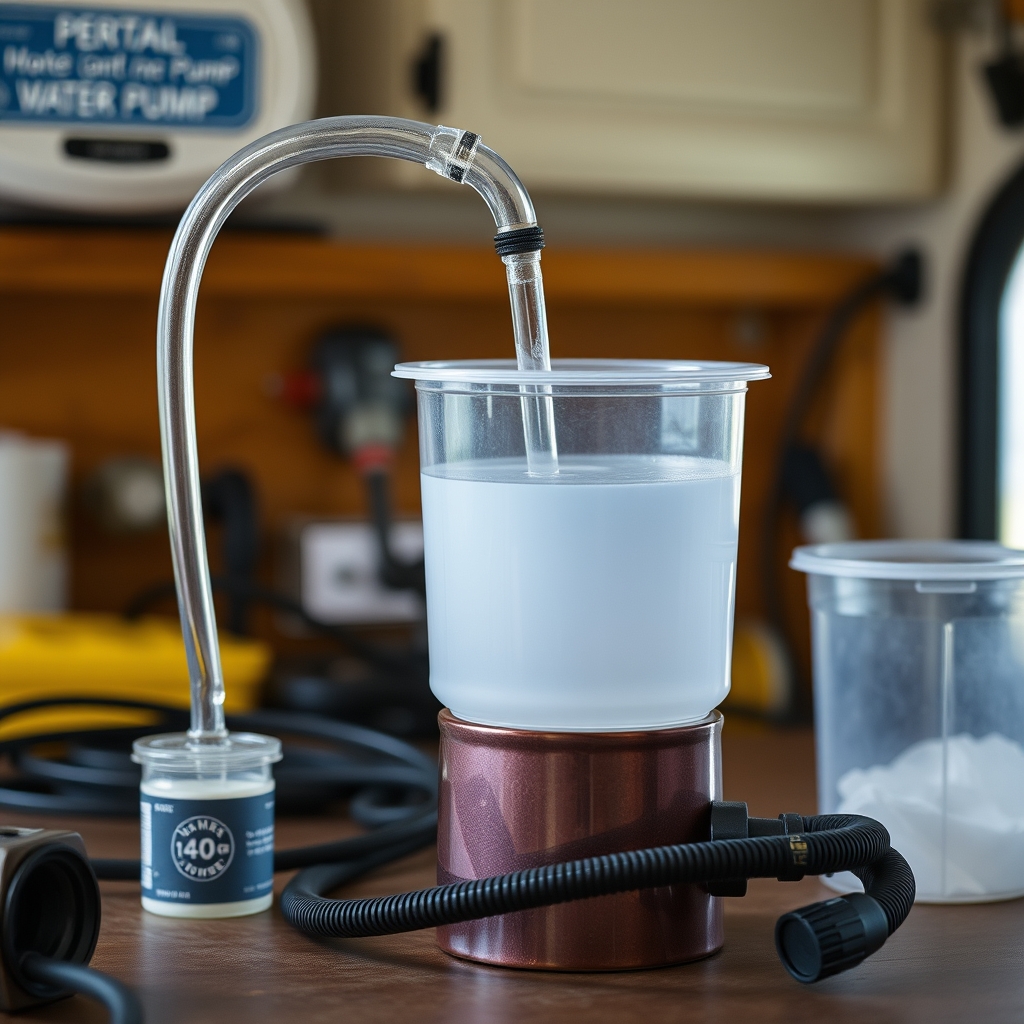
If the electrical supply is correct and the intake path looks good, isolate the pump before condemning it.
A practical diagnostic method is to temporarily feed the pump from a clean container of potable water using appropriate hose.
If the pump primes and produces strong flow from the container, the problem is upstream in the RV’s tank, valve, strainer, or suction plumbing.
If it still cannot prime or build pressure with a known-good water source, the pump head, valves, diaphragm, pressure switch, or motor is more likely to be faulty.
When should you replace the pump?
Replacement becomes reasonable after you have confirmed:
- Correct 12V power and ground
- Water in the fresh tank
- Correct valve positions
- Clean inlet strainer
- No suction leak
- No kinked inlet hose
- Pump still cannot prime or build pressure from a known-good water source
Do not replace the pump just because it runs loudly after winterization.
A valve-position, air-leak, or priming problem can create the same symptom.
Troubleshooting order
Use this sequence:
- Confirm water is actually in the fresh tank.
- Check the pump switch and fuse.
- Measure voltage at the pump if it is silent.
- Check winterizing and tank-select valves.
- Clean the inlet strainer.
- Open a faucet and let the pump prime.
- Inspect suction fittings for air leaks.
- Check the inlet hose for restriction.
- If the pump runs constantly, look for pressure loss.
- Isolate the pump from the RV plumbing before replacing it.
Frequently asked questions
Quick answers to the questions RV owners usually ask after working through this guide.
01 Why does my RV water pump run but no water comes out?
The pump is usually not getting water on the inlet side. Check the fresh tank, valve positions, inlet strainer, suction hose, air leaks, and whether the pump has lost prime.
02 Why is my RV water pump completely silent?
Start with the pump switch, fuse, battery voltage, ground, and voltage at the pump. If correct voltage reaches the pump but it remains silent, the pressure switch, motor, or pump mechanism may have failed.
03 Why does my water pump keep running?
The system is not reaching shutoff pressure. Look for an open fixture, plumbing leak, suction-side air leak, check-valve problem, or pressure-switch fault.
04 Why does the pump cycle when no faucet is open?
The plumbing is slowly losing pressure. Check faucets, the toilet valve, outside shower, fittings, and the pump’s internal check valve.
05 Do I need the water pump on when connected to city water?
Normally no. City-water pressure feeds the RV plumbing directly, so the onboard pump is generally switched off.
Bottom line
Diagnose the pump by what it does.
A silent pump points toward power, wiring, or the pump itself. A running pump with no water points toward the tank, valves, inlet strainer, suction leaks, or lost prime. A pump that never shuts off points toward pressure loss or an internal pump problem.
Prove the power supply and water path before replacing the pump.
This guide is educational. Stop and use a qualified RV technician when a procedure involves unsafe electrical, propane, structural or pressurized-system work beyond your experience.