If your RV furnace is not working, start with what the furnace does when you call for heat. The symptom usually tells you which part of the startup sequence has failed.
| Symptom | Most likely areas |
|---|---|
| Nothing happens | Thermostat, fuse, 12V supply, wiring |
| Blower runs but no heat | Low voltage, sail switch, propane, ignition |
| Furnace clicks but will not light | Propane supply, igniter, gas valve |
| Furnace lights then shuts off | Flame sensing, airflow, high-limit switch |
| Repeated ignition attempts then stop | Lockout, low voltage, propane, flame sense |
The fastest approach is to follow the startup sequence instead of replacing parts.
Safety first
An RV furnace combines propane, 12-volt controls, hot exhaust, and combustion air.
If you smell propane, suspect a gas leak, find burned wiring, or need to test gas pressure or internal combustion components, stop and use a qualified RV technician.
Do not bypass safety switches to keep the furnace running.
How the furnace normally starts
A typical propane RV furnace follows this sequence:
- Thermostat calls for heat.
- Blower starts.
- Airflow closes the sail switch.
- The safety circuit allows ignition.
- Gas valve opens.
- Igniter sparks.
- Burner lights.
- Flame is confirmed.
- Furnace continues running.
The point where this sequence stops is your best diagnostic clue.
Symptom 1: Nothing happens
If you turn the thermostat up and the blower never starts, stay on the 12-volt side.
Check:
- Thermostat is in HEAT mode
- Furnace fuse
- House-battery voltage
- Battery disconnect
- Furnace ground and accessible wiring
A battery can still run lights but sag under the heavier blower load.
If the furnace is completely dead, do not start by replacing the sail switch or gas valve.
Symptom 2: Blower runs but there is no heat
If the blower starts but the furnace never ignites, the system has passed the first part of the sequence but has not completed airflow verification or ignition.
Check battery voltage under load
Low voltage is a common cause.
The blower must spin fast enough to create the airflow needed to close the sail switch.
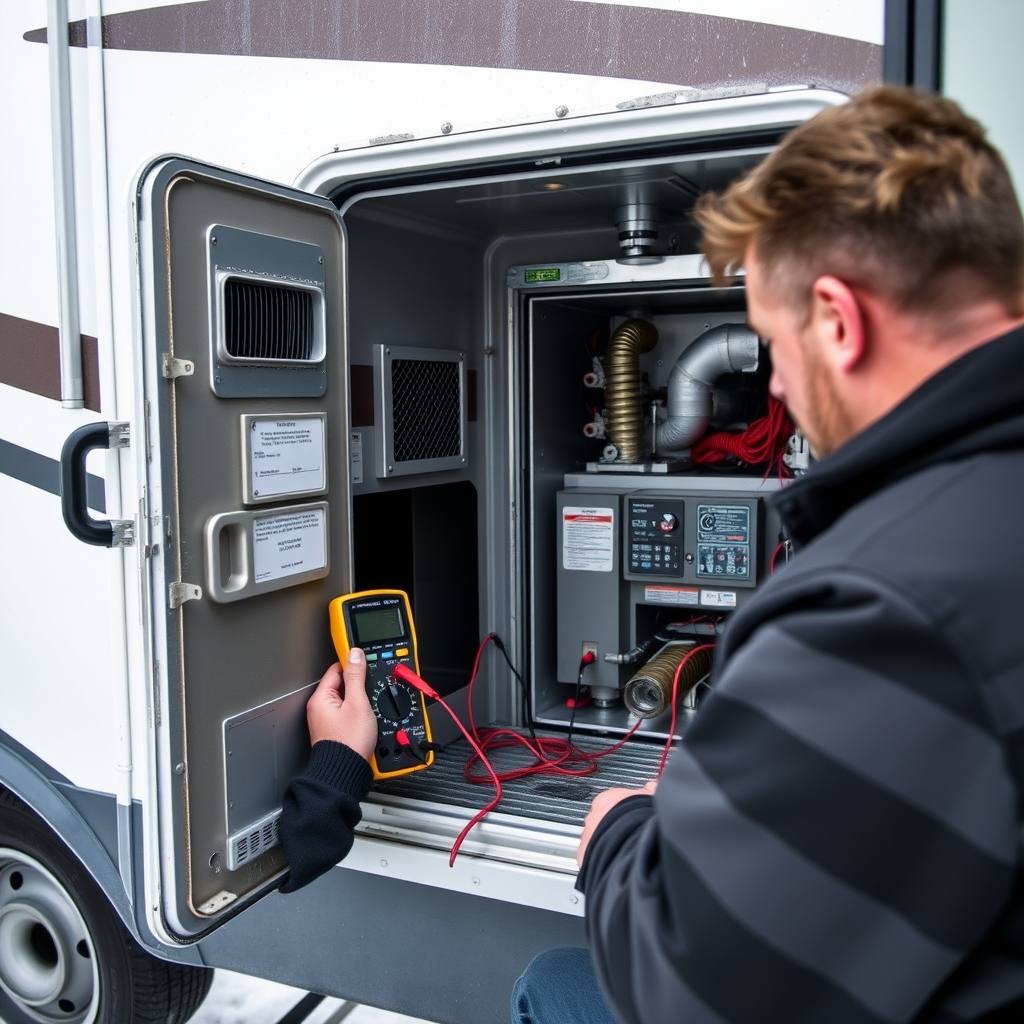
Measure battery voltage while the furnace is actually trying to start.
If voltage drops heavily when the blower starts, investigate the battery, charging system, cable connections, and grounds before replacing furnace parts.
Check the sail switch
The sail switch confirms that enough air is moving through the furnace.
Dust, pet hair, lint, rust, insect debris, or a slow blower can keep it from closing.
With power to the furnace turned off, inspect the blower and sail-switch area according to the furnace service procedure.
Do not bypass the sail switch. It is a safety device.
Check the exterior intake and exhaust
Inspect the outside furnace vent for:
- Mud-dauber nests
- Insects
- Leaves
- Dirt
- Other debris
A blocked intake or exhaust can prevent ignition or cause the furnace to shut down.
Remove only debris that can be cleared safely and follow the manufacturer’s procedure.
Symptom 3: Furnace clicks but will not ignite
If you hear ignition ticking, the control sequence has progressed further.
Now focus on propane delivery and ignition.
Check:
- Propane tank level
- Service valve
- Whether other propane appliances work
- Burner area for debris
- Igniter condition and position
- Ignition wire and ground
Do not adjust propane pressure by guesswork. Proper gas-pressure testing requires a manometer.
Symptom 4: Furnace lights then shuts off
If the burner lights and then shuts down before the thermostat is satisfied, focus on flame confirmation and overheating protection.
Check flame sensing
A dirty electrode, poor ground, damaged wire, or incorrect electrode position can prevent the control board from confirming a stable flame.
If the board does not detect flame, it closes the gas valve.
Check airflow and the high-limit circuit
Restricted airflow can make the furnace overheat and open the high-limit switch.
Check for:
- Blocked return air
- Closed or blocked heat registers
- Crushed ducts
- Dirty blower wheel
- Low blower speed
- Intake or exhaust blockage
If the furnace is genuinely overheating, replacing the limit switch alone will not fix the cause.
Symptom 5: It tries several times and then stops
Many furnaces enter ignition lockout after repeated failed attempts.
If that happens repeatedly, check:
- Battery voltage under load
- Propane supply
- Sail-switch operation
- Intake and exhaust
- Igniter condition
- Flame sensing
- Diagnostic LED or fault code
Use the fault-code chart for your exact furnace model. Flash codes are not universal.
Check the diagnostic light
Many RV furnaces have a control-board LED that flashes a fault pattern.
That code can help narrow the problem to areas such as:
- Ignition lockout
- Sail-switch circuit
- Limit-switch circuit
- Internal board fault
Use the correct service manual for the model number.
A fault code should narrow diagnosis, not automatically decide which part to replace.
When should you suspect the control board?
The control board should be one of the last suspects.
It becomes more likely after you have confirmed:
- Correct 12V power and ground
- Thermostat call for heat
- Blower operation
- Sail-switch operation
- Clear intake/exhaust
- Propane supply
- Igniter condition
- Safety-switch operation
If the board receives the correct inputs but fails to command the next step, board diagnosis becomes reasonable.
Why does the furnace work on shore power but not battery?
The furnace still depends on the RV’s 12-volt system.
When connected to shore power, the converter may support system voltage enough for the blower and controls to work.
If the furnace fails only when unplugged, test the battery and voltage drop under blower load.
That symptom often points to the 12-volt supply rather than the furnace itself.
Troubleshooting order
Use this sequence:
- Confirm thermostat settings.
- Check the furnace fuse.
- Measure battery voltage.
- Call for heat and observe what happens.
- If the blower runs, check airflow and the sail switch.
- Inspect intake and exhaust.
- Confirm propane supply.
- Listen for ignition.
- If it lights then stops, check flame sensing and overheating causes.
- Read any fault code.
- Suspect the board only after the earlier checks pass.
Frequently asked questions
Quick answers to the questions RV owners usually ask after working through this guide.
01 Why does my RV furnace fan run but there is no heat?
The furnace may not be getting past the airflow or ignition stage. Check battery voltage, the sail switch, propane supply, exterior vent, and igniter.
02 Can low battery voltage stop the furnace from lighting?
Yes. The blower may run but not fast enough to close the sail switch or maintain proper airflow.
03 Why does the furnace ignite and then shut off?
Common causes include flame-sense problems, restricted airflow, low blower speed, intake/exhaust blockage, or a high-limit shutdown.
04 Should I bypass the sail switch?
No. It is a safety device. Test it using the manufacturer’s procedure or have it checked by a technician.
Bottom line
Diagnose an RV furnace by the point where the startup sequence stops.
No blower points toward thermostat, fuse, or 12V power. Blower with no heat points toward voltage, airflow, the sail switch, propane, and ignition. A furnace that lights then stops points more toward flame sensing or overheating protection.
Following the sequence is faster and safer than replacing parts one by one.
This guide is educational. Stop and use a qualified RV technician when a procedure involves unsafe electrical, propane, structural or pressurized-system work beyond your experience.